Global trends are reaching the food industry faster than ever. A concept that appears in an international report today may become a topic of discussion among marketing, innovation, purchasing, product development, or senior management teams tomorrow.
Functional beverages, snacks with improved nutritional profiles, enriched dairy products, more balanced baked goods, supplements for new consumption occasions, meat products in practical formats, novel sensory experiences, recognizable ingredients, and products with a lower environmental impact are some of the opportunities driving the industry today.
The path from identifying a trend to turning it into a successful product is far more demanding than choosing an appealing idea. A trend does not become real innovation until it can be formulated, produced, scaled up, maintain its quality, comply with regulations, meet consumer taste preferences, and be viable for the business.
In food and beverages, innovation does not end with the idea: it begins when that idea enters the laboratory.
Innovation Begins with the Consumption Occasion
A global trend can point the way, but it does not provide a market-ready recipe. It can tell us what consumers are looking for; however, each category has its own technical, sensory, and production rules.
Each food matrix responds differently. Texture, flavor, stability, processing, shelf life, ingredient interactions, and consumer expectations all vary.
That is why translating a trend means asking the right questions:
- What specific need does this trend express?
- In which category does it make the most sense to apply it?
- What do consumers expect when buying this type of product?
- Which attributes must be preserved?
- What technical, regulatory, and economic constraints does development face?
- What solution can perform consistently in production and reach the market with that same consistency?
Food innovation requires a comprehensive perspective. Knowing what is happening around the world is not enough. It is essential to understand how to make it possible in a specific category, market, and production facility..
Innovation begins with the consumption occasion
Trends do not become real when they appear in a presentation, but when they connect with a specific consumption occasion.
Before considering an ingredient or a formulation, it is worth asking: what consumption occasion are we developing for?
A functional beverage to start the day is not the same as one designed for an afternoon break, nor is a traditional sweet the same as one developed for more mindful consumption occasions.
The occasion defines much of the innovation: format, portion size, flavor intensity, texture, packaging, convenience, level of indulgence, communication, and even the expected price.
At this point, the global trend needs to become concrete. “Well-being,” “energy,” “protein,” “naturalness,” and “sustainability” are broad concepts. The challenge is to turn them into a specific experience that is relevant and understandable to consumers.
Each food matrix presents different challenges
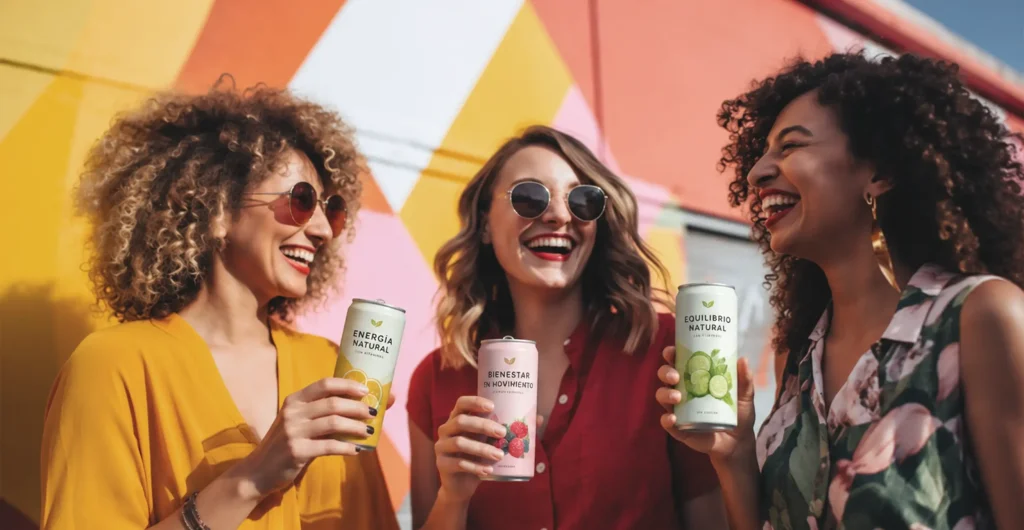
In beverages, global trends take shape very quickly. Hydration, energy, focus, relaxation, digestive well-being, low sugar content, natural ingredients, and on-the-go formats are highly active areas. An innovative beverage must not only incorporate a functional ingredient, but also address flavor, color, mouthfeel, stability, solubility, acidity, and sensory freshness.
In dairy, innovation coexists with nutrition, trust, and habit. Yogurts, desserts, flavored milks, dairy beverages, creams, and cheeses can incorporate protein, sugar reduction, digestive health, satiety, or fortification. Any change must preserve texture, creaminess, perceived sweetness, stability, and sensory familiarity.
In baked goods, innovation moves between tradition and evolution. Breads, cookies, loaf cakes, panettone, muffins, and premixes can improve their nutritional profiles, add fiber or protein, reduce sugar, or extend shelf life. But texture is decisive: crumb, moisture, volume, crunchiness, elasticity, baking color, and preservation can change with small formulation adjustments.
In snacks, the challenge is to create immediate desire. Intense flavors, unexpected combinations, regional inspiration, nutrition claims, plant-based options, or products with more protein can create distinctive offerings. But the product has only a few seconds to attract attention and a few bites to deliver on its promise.
In sweets, the tension between indulgence and well-being is increasingly evident. Desserts, candy, chocolates, preserves, and jellies can explore sugar reduction, more natural profiles, added fiber, or new forms of sweetness. However, sweetness also affects body, texture, aroma perception, gloss, stability, and the emotional experience. A sweet product can be healthier, but if it loses its pleasure appeal, it is unlikely to gain acceptance.
In meat products, trends are linked to protein, satiety, sodium reduction, cleaner labels, convenient formats, and options aimed at different consumption occasions. Texture, juiciness, bite, color, microbiological stability, shelf life, and flavor profile are central attributes that cannot be compromised.
In supplements, the functional promise must be accompanied by credibility, ease of use, and a good sensory experience. Protein, energy, recovery, digestive well-being, metabolic health, focus, or rest require work on ingredient selection, nutritional profile, stability, flavoring, color, solubility, dosing, and clarity of communication.
Innovation also means making value viable
In Latin America, a global trend must also pass the accessibility test. A product may be technically innovative, nutritionally appealing, and sensorially distinctive, but if it cannot find a format, portion size, price, or value proposition compatible with consumers’ circumstances, it is unlikely to scale.
This scenario does not rule out innovation; it makes it more challenging.
Innovation does not always mean greater sophistication. Sometimes it means making an offering clearer, more practical, longer-lasting in use, more affordable, or easier to incorporate into a routine. In some cases, innovation will lie in the formulation. In others, in the format, portion size, shelf life, stability, production efficiency, or ability to maintain quality at reasonable costs.
In Latin American markets, value is not declared: it is demonstrated. And it is often demonstrated through the complete equation of experience, price, yield, and trust.
From insight to the laboratory: where the idea becomes possible

The laboratory is where a trend stops being an abstract idea and starts becoming a real solution.
There, formulations are tested, flavors are adjusted, colors are evaluated, textures are corrected, functionalities are tested, stability problems are anticipated, and industrial viability is analyzed. It is also where teams identify which parts of the original idea work, which need adaptation, and which should be discarded.
This process does not take creativity away from innovation. On the contrary: it makes it possible. Many promising ideas fail not because of a lack of creativity, but because of a lack of support to turn them into stable, scalable, and appealing products. Between an identified trend and a food product that reaches the shelf lies a demanding journey: testing, adjustments, validation, costs, processes, shelf life, texture, color, flavor, functionality, and the consumption experience.
At Grupo Saporiti, we understand innovation as a collaborative process. We support our customers so they can bring their ideas to our laboratories, work alongside our expert teams, explore our technologies, and transform market opportunities into concrete solutions for beverages, dairy, baked goods, snacks, sweets, meat products, supplements, and other food industry categories.
It is not just about supplying ingredients. It is about contributing knowledge, experience, and development capabilities so that a trend can become a feasible, consistent, and distinctive product.
In food, innovation does not exist solely in a trend report, a sales presentation, or a promise for the future; it comes to life when an idea is formulated, tested, adjusted, improved, and finally reaches people’s tables.